
General Industrial Machinery Lubrication
A small gearbox, a conveyor idler, a fan or blower bearing, a motor pedestal: a handful of points that need feeding on schedule, on equipment too small to justify a full progressive distributor network. We supply the compact manual and motor-driven pumps that cover that job directly, factory-fit to machinery builders in India and as retrofit kits for plant maintenance teams replacing a grease gun round.
The lubrication points
What a small gearbox or general machine feeds
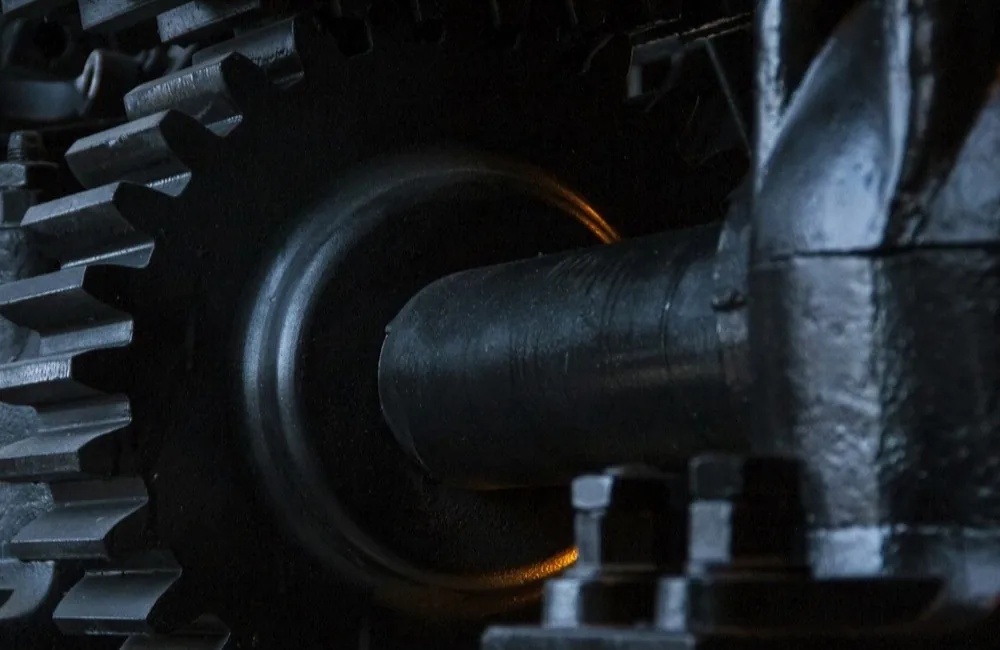
The shaft bearings either side of the unit and the gear mesh between them: a handful of points, close together, that a single compact pump can reach without a distributor block for every one.
Point 1
Input & output shaft bearings
The bearings that carry the shaft either side of the housing, on a motor, fan, blower, conveyor idler or gear reducer. General-purpose points, the kind that fail from being forgotten on a manual round rather than from any unusual duty.
Point 2
Gear mesh
The meshing teeth inside a small gearbox or reducer, run continuously rather than dosed per-cycle. A steady, low-pressure feed suits this point better than the per-stroke charge a progressive system delivers.
Point 3
Two or three points, one source
Where a machine has a few points within reach of each other rather than twenty spread across a frame, a small resist-type or volumetric distributor off one compact pump covers all of them without the cost of a progressive block.
Not this system
High point counts & shock loading
A machine with many points spread across a large frame, or bearings taking real shock loading, outgrows this tier. See injection moulding for the resist-type step up, or construction and forging for the progressive systems built for that duty.
The architecture
Why compact suits general machinery
Not every machine needs a progressive distributor, and sizing one for a handful of points spread over a small footprint just adds blocks and pipe runs a simpler system does not need. The GM type grease pump is built for exactly this: its own specification names it for medium and small machinery, running through a progressive, volumetric or resist-type distributor depending on the point count, rather than being locked into one architecture. For a handful of points close together, a resist-type distributor covers the job at lower cost than a progressive block, metering by flow resistance rather than a piston stroke; the same reasoning an injection moulding clamping unit uses at a larger point count. Where the equipment is smaller still, or the budget tighter, the NKGH manual pump feeds the same distributor by hand, no motor or controller required. See how the three metering architectures compare and choosing the right distributor.
A gear mesh point is usually oil, not grease, and wants a continuous feed rather than a dose. The BM cycloidal pump is built for that: simple construction, a steady delivery rate, and a working pressure low enough that it is sized to the point rather than the point being sized to it.
| Point | Lubricant | Metering | Herg components |
|---|---|---|---|
| Shaft bearings (motor-driven) | Grease | Resist type | GM grease pump + TCJ / TCZ distributor |
| Shaft bearings (hand-pumped) | Grease | Resist type | NKGH manual grease pump + TCJ / TCZ distributor |
| Gear mesh | Oil | Continuous feed | BM cycloidal pump |
| Points spread further apart | Oil | Volumetric, dosed | RH3 distributor or 35 type distributor |
| Line branching | N/A | N/A | TH joint fitting, 2 to 10 outlets |
| Monitoring | N/A | N/A | Pressure switch, gauge, filter, level indicator |
Built for the machine and the budget
Manual where a motor isn't justified, motor-driven where it is
The GM pump runs on a three-phase 380 V, 90 W motor with a 2 or 4 L reservoir, rated at 3.5 MPa nominal and 5.0 MPa maximum, with or without a timer module. That is enough pressure and reservoir for most general machinery, at a fraction of the cost of the high-pressure pumps a bigger system needs. Where a machine is too small or too occasional in use to justify a motor and a timer at all, the NKGH manual pump delivers grease through the same distributor at 10 MPa from the reciprocating action of its handle, feeding the reservoir into whichever architecture the machine already has.
Grease grade still matters more than the hardware rating: see choosing the right lubricant for the grade a given duty and ambient temperature calls for. Every product comes with an installation and operating manual, and the same pressure switch and level indicator accessories used on the larger systems fit here too, for a plant that wants a blocked line reported rather than found on the next round.
Who we supply
Factory-fit for machinery builders, retrofit for plant maintenance
Machinery & equipment builders
OEM production supply
Engineered to the point count rather than sold as a one-size system, for gearboxes, fans, blowers, conveyors and general processing machinery. Start with the pump range and the distributor range and we will match them to the machine.
Discuss an OEM programme →Plant & maintenance teams
Retrofit & replacement
Equipment on a manual grease gun round can be retrofitted without a redesign: a compact pump, a small distributor sized to the existing points, and pipe run out to each one. We also supply drop-in replacement pumps and distributors, with fault finding guidance online for a system already in service.
Ask about a retrofit →Common questions
General industrial machinery lubrication, answered
Which points does this system feed?
Shaft bearings and gear mesh points on general machinery: motors, fans, blowers, conveyor idlers and small gearboxes. A handful of points close together, not the twenty-plus spread across a large frame that a progressive system is built for.
Why not a progressive distributor for this too?
Cost and complexity that the point count does not need. A progressive block earns its keep on a machine with many points or heavy shock loading, where a blocked line has to be caught immediately. On a handful of general-purpose points, a resist-type or volumetric distributor off one compact pump covers the same job for less.
Does this need a distributor at all?
Only once there is more than one point to feed. A single bearing can be fed straight from the pump; two or more nearby points are usually cheaper to feed through one small resist-type or volumetric distributor than to run a separate pump to each.
Manual or motor-driven, which do I need?
The NKGH manual pump suits equipment used occasionally or where a motor and timer are not justified. The GM motor-driven pump suits equipment that runs continuously and needs feeding on a schedule without someone remembering to pump the handle.
What pressure does the system run at?
The GM pump runs at 3.5 MPa nominal and 5.0 MPa maximum, and the NKGH manual pump at 10 MPa. Both are well below the 18 to 30 MPa range the site's progressive systems run at, because general machinery bearings don't need it.
What feeds the gear mesh in a small gearbox?
Usually oil on a continuous feed rather than a dosed grease charge. The BM cycloidal pump is built for that: simple construction, a steady delivery rate, sized to the point rather than over-specified for it.
Can it be retrofitted to equipment already in service?
Yes. Existing grease nipples are replaced with pipe connections fed from the pump or distributor, without redesigning the equipment. Send us an enquiry with the machine and its points.
Do you supply machinery builders in India?
Yes. We supply general industrial machinery builders and plant maintenance teams across India, sizing the pump and distributor to the point count and duty. Send us an enquiry with the machine and the points you need fed.
Running general machinery on a grease gun round?
Tell us the machine, the points you want fed and how it's powered, and we will come back with the pump and distributor package that fits, sized to the job rather than oversold.